

„Nem tudok rajzolni, és nem is szeretek”. „Nem vagyok kreatív”. „Béna vagyok, ez nekem nem fog menni, nem is jelentkezem ilyenre..nem vagyok művészi vénával megáldva, nem tudok alkotni semmit”. Provokatív mondatokkal nyitom ezt a bejegyzést. Ezeket, és ehhez hasonló reakciókat kaptam az esetek 80 %-ban. Megdöbbentő arány. Igen, a rajzórák és az oktatás. Nem is kérdés, nincs is kétség. De mit lehet kezdeni így, ha az egyik legnagyobb kommunikációs csatorna blokkolva van? Pedig az alkotás, nyomhagyás ősi igény. Mindenki képes rá, és az élettel együtt jár az öt érzékszervhez kapcsolódó módja. Egyszerű példán mutatom be, majd Wilber kvadránsán keresztül közelítek a komplex művészetterápiához, hogy bemutassam: előképzettség nélkül, bárki képes alkotni.

Színházba megyek, megnézem az előadást és annak mértékében tapsolok a végén, ahogy tetszett. A tapsommal, szavak nélkül fejezem ki a tetszésem. Tegyük fel, hogy az ismeretlen mellettem ülőnek nem tetszett, és nem tapsol. De az előttem ülőnek annyira tetszett, hogy állva tapsol. A többiek látva ezt a reakciót csatlakoznak a felállóhoz, mire a mellettem ülő nem tapsoló durrogva feláll és mindenkin átcsörtetve távozik. A példa egyszerűségén tetten érhető az a folyamat és működésmód, amivel a művészetterápia és alkotói folyamata dolgozik. Az első az egyén a bejövő impulzusra másik csatornán válaszol. Nem az a bevett szokás a mi kultúránkban, hogy az előadás végén egy másik előadással fejezzem ki a tetszésemet, vagy nem tetszésemet. Mi tapsolunk. Valahol lábbal dobognak. Ha akarom, ha nem, egy térben vagyok a mellettem ülővel, és az előttem ülők reakciója is hatással van rám ( konkrétan kitakarja a tapsrendet előttem). Így azonnal tetten érhető, hogy nem lehet egy valamit egy szempontból vizsgálni, mert rengeteg dolog hat egymásra. Én saját belső működésem alapján döntök (tudatosan, vagy tudattalanul), hogy hogyan reagálok a saját vélemény nyilvánításommal a csoportban. És már ez az egyszerű példa is mutatja, hogy mennyire összetett az egyéni és csoportos belső, és külső világunk. Hogy kapcsolódik mindez a komplex művészetterápiához? Amikor a művészetterápia folyamata történik, pont ez történik. Minden ember képes az öt érzékszervén át érkező egyéni és csoportos ingerekre reagálni egy másik kifejezési csatornán azzal a működéssel, amit az ITT és MOST kivált belőle. A reakciója nem minősíti őt, hanem tükrözi (bemutatja, láthatóvá teszi) a belső működését. Ez nem tartozik megítélés alá, nem jó, vagy rossz. Itt és most így működik. Tehát az alkotófoglalkozáson érkezik egy inger, és arra reagálni kell egy másik csatornán, másik érzékszervek működtetésével. A példában ez az előadás tetszésére adott taps egyéni és csoportos válasza. Az alkotásban például egy instrukcióra adott szavak és kommentár nélküli ceruzamozgatás, firkálás, festék folt készítés, mintázás..

Ha tovább közelítek a színház – és tapsolás példával élve a mellettem ülő, és elém álló jelenléte, véleménye, annak kifejezése azonnal tetten érhető a művészetterápiás csoportos alkotás során. A reakcióm azonnal tükrözi a működési módomat. Azonnal reagál rá a csoport is, reagálunk egymásra. Ha a firkálás példájánál maradok, akkor remélem sikerült rávilágítanom arra, hogy ezért sem fontos mit ábrázol a firka, szép-e vagy csúnya, tetszik, vagy nem tetszik. Célja a belső működésmód tükrözése. Nem azért jön létre, hogy ábrázolja a működésmódot, és annak legyen egy művészileg meghatározott értéke, amit múzeumba kell tenni. Ha pedig nem értékes művészileg, akkor kuka és az alkotó is megy a kukába, mert „béna” mint a műve… nem-nem, semmi és senki nem megy a kukába:) A tükrözés néha nehéz, de pont ettől csodálatos: szavak nélkül mutat be olyat, amit nem tudtam, vagy nem láttam rá, vak voltam rá (Lásd a korábbi bejegyzésben a Johari ablakról írtakat).

Folytatom a párhuzamot: az előadásról kifejtett véleményem, reakcióm a tapsolás erősségével fejezem ki. Egy instrukcióra, verse, mesére létrejövő reakcióm kifejezhetem színekkel is, anyagokkal, különböző technikák ötvözetével, amit pont úgy választhatok ki, ahogy ITT és MOST a működöm.

Ha nem a fent említett technikákat használom, akkor a bennem lévő működés által a válaszreakcióm kifejezésére választhatok képet, kártyát, tárgyat, kacatot, bármit.. mert pont olyan a színe, a tapintása, a nagysága, felülete, mint amit ki szeretnék fejezni szavak használata nélkül. Ez az alkotási mód a kiválasztás elvére épül, ami pont ugyan olyan alkotás, mint a korábban felsorolt szinte rémisztő és blokkoló rajzolás és festés.
Remélem sikerült bemutatnom, hogy az ALKOTÁS a komplex művészetterápiás munka során a bennünk lévő reakció kifejezését mutatja, ábrázolja, jeleníti meg. Ez nem azonos azzal, hogy művészi módon ábrázolom a bennem zajló folyamatokat. Elsőre sokan ezt gondolják. Határozottan nem, ezért is mutattam be a tapsolós példával és a rétegekkel (egyéni belső. külső, csoportos belső, külső), hogy nem lineáris egy összetevőjű folyamatról van szó, ahol a végeredmény, mint alkotás segíti az önismeretet. Nem is a végeredmény a fontos, nem a produktum elkészítése a cél. Ennek a folyamatnak a megélése az önismereti munka. Így amire nincs szó, van kép, vagy tárgy, szín, vagy hang, mozdulat..bármi, ami az öt érzékszerv közötti „átjárást” leginkább lehetővé teszi. Ez a munka, sem a létrejövő válasz reakció nem jó, vagy rossz, szép vagy csúnya… csak van, és a kifejezés által tükröz, megmutat, bemutat, felszínre hoz attól függően, hogy a belső folyamat hol tart ITT és MOST.

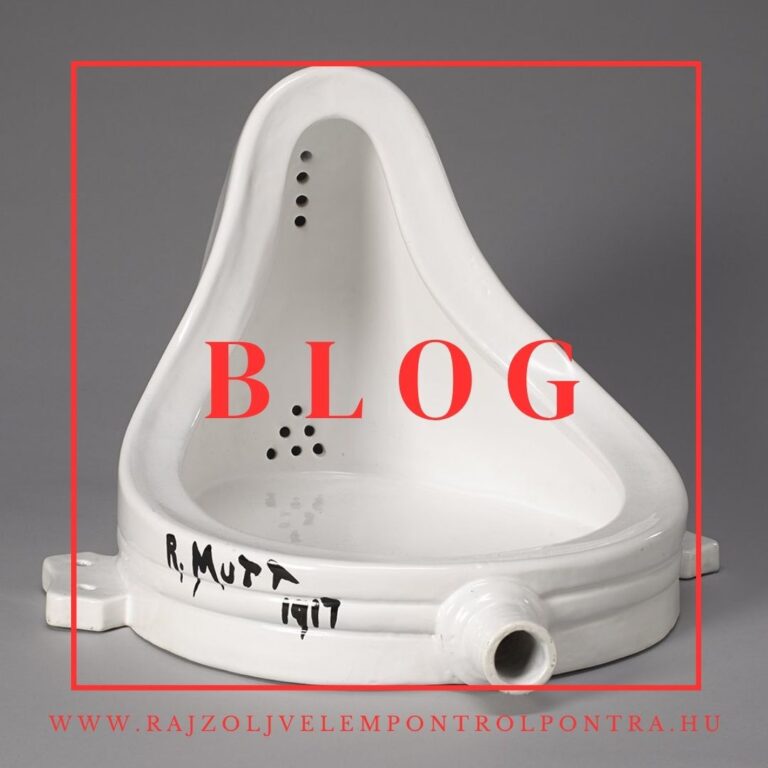
Az európai kultúra évszázadokig múzeumban állította ki a műalkotásokat, így csak annak volt ALKOTÁS értéke. Amikor a posztmodern kultóra hajnalán Duchamp egy WC csészét állított ki, a korábbi hagyományokra hivatkozva joggal tette fel a kérdést: akkor ez most műalkotás? Ezt a választott tárgyat ábrázoló fotót tettem a bejegyzés index fotójának. A következő bejegyzésben pedig folytatom az alkotási lehetőségek bemutatását az IDŐ és TÉR bekapcsolásával: szó lesz az írás, hangok, test és mozgás, fotó és installáció komplex művészetterápiás lehetőségeiről.
Ha szeretnéd mindezt a gyakorlatban is kipróbálni, írj a rajzoljvelempontrolpontra@gmail.com címre, és keresd az események között az induló csoportokat! Rajzolj velem, alkoss velem pontról pontra az önismereti úton!
I Can’t Draw – and I Don’t Even Like Drawing
“I can’t draw, and I don’t even like drawing. I’m not creative. I’m hopeless at it. This isn’t going to work for me, so I’m not even signing up. I wasn’t blessed with an artistic streak. I can’t create anything.”
I’m opening this post with some deliberately provocative statements. I received reactions like these – or very similar ones – in 80% of cases. That is a staggering proportion. Yes, I’m talking about drawing classes and education. There is really no question about it. But what can we do when one of our most important channels of communication has been blocked? And yet, the need to create and to leave a trace is ancient. Everyone is capable of it, and it is part of being alive. It can happen through the different pathways connected to our five senses. I’ll demonstrate this with a simple example first, and then approach complex art therapy through Wilber’s quadrants to show that anyone can create, without any prior artistic training. I go to the theatre, watch a performance, and at the end I clap to the extent that I enjoyed it. Through my applause, I express my appreciation without words. Let’s suppose that the stranger sitting next to me didn’t enjoy the performance and doesn’t clap. The person sitting in front of me, however, enjoyed it so much that they stand up and applaud.
Seeing this reaction, the others join in and stand up as well. Meanwhile, the person next to me who had not been applauding also gets up, grumbling, and storms out through the crowd. Even in the simplicity of this example, we can see the kind of process and way of functioning that art therapy and the creative process work with. First, the individual responds to an incoming impulse through a different channel. In our culture, it is not customary to express our appreciation or dislike of a performance by giving another performance ourselves at the end. We clap.
Somewhere else, people may stamp their feet.
Whether I want to or not, I am sharing a space with the person sitting next to me, and the reactions of the people in front of me also affect me – quite literally, they may block my view of what is happening. This immediately demonstrates why something cannot be examined from a single perspective: countless things influence one another. Based on my own inner functioning, I decide – consciously or unconsciously – how I respond and express my opinion within the group. And this simple example already shows how complex our individual and collective inner and outer worlds are.
So how does all of this relate to complex art therapy? When the process of art therapy takes place, this is exactly what happens.
Every person is capable of responding to the individual and collective stimuli arriving through their five senses via another channel of expression, using the way of functioning that is activated in them HERE AND NOW. The response does not define or judge the person. Instead, it reflects their inner functioning – it makes it visible. It is not something to be judged as good or bad. This is simply how I function here and now. So, during a creative session, a stimulus arrives, and we respond to it through another channel, engaging different senses. In the theatre example, this is the individual and collective response expressed through applause. In the creative process, it might be the movement of a pencil in response to an instruction, without words or commentary: scribbling, making a paint mark, modelling with a material, and so on.If I take the theatre and applause example a little further, the presence, opinion and expression of the person sitting next to me – or standing in front of me – immediately become apparent during a group art therapy process.
My reaction immediately reflects my way of functioning. And the group responds to it. We respond to one another.
If I stay with the example of scribbling, I hope it becomes clear why it is not important what the scribble depicts, whether it is beautiful or ugly, whether we like it or not. Its purpose is to reflect our inner way of functioning.
It is not created to artistically represent that way of functioning or to have some kind of artistic value that means it belongs in a museum. And if it has no artistic value, does that mean it goes in the bin – and the person who created it goes in the bin too because they are “hopeless”, just like their artwork?No, no. Nothing and nobody goes in the bin. 🙂 Reflection can sometimes be difficult, but that is precisely what makes it so wonderful: without words, it can show me something I didn’t know, something I couldn’t see, something I was blind to.
(See: the Johari Window.)Let’s continue the parallel.I express my opinion and reaction to the performance through the intensity of my applause. In response to an instruction, a poem or a story, I can express my reaction through colours, materials, or a combination of different techniques – choosing them in exactly the way my functioning shows itself HERE AND NOW. But what if I don’t use any of the techniques mentioned above? Then I can choose an image, a card, an object, a piece of junk – anything – to express the response arising from within me. Perhaps it has exactly the colour, texture, size or surface that corresponds to what I want to express without using words. This way of creating is based on the principle of selection. And it is just as much a creative response as the previously mentioned forms of drawing and painting – forms that can feel almost frightening and blocking for some people. I hope I have managed to demonstrate that, in complex art therapy, CREATION expresses, represents and makes visible the response that exists within us.This is not the same as artistically depicting the processes taking place inside us. At first, many people assume that it is. It definitely is not.
That is why I used the example of applause and the different layers – individual inner, individual outer, collective inner and collective outer – to demonstrate that this is not a linear, single-component process in which the finished artwork simply helps us gain self-awareness.
Sometimes, when there are no words, there is an image.
Or an object.
A colour.
A sound.
A movement.
Anything that most strongly supports the “transition” between our five senses. And neither this process nor the response that emerges from it is good or bad, beautiful or ugly.It simply exists.
Through expression, it reflects, reveals, brings something into view and brings something to the surface – depending on where the inner process is HERE AND NOW.For centuries, European culture placed works of art in museums, and therefore only those objects were granted the value of CREATION.When, at the dawn of postmodern culture, Duchamp placed a urinal in a museum, he was quite rightly able to raise the question, referring to established traditions: So, is this now a work of art? I chose a photograph of this selected object as the cover image for this post. In my next post, I will continue exploring the possibilities of creation by introducing TIME and SPACE. I will talk about writing, sounds, the body and movement, photography, and installation as possibilities within complex art therapy.
If you would like to experience all of this in practice, write to rajzoljvelempontrolpontra@gmail.com, and look among the upcoming events for the groups that are about to start.
Draw with me. Create with me. Step by step on the journey of self-discovery.